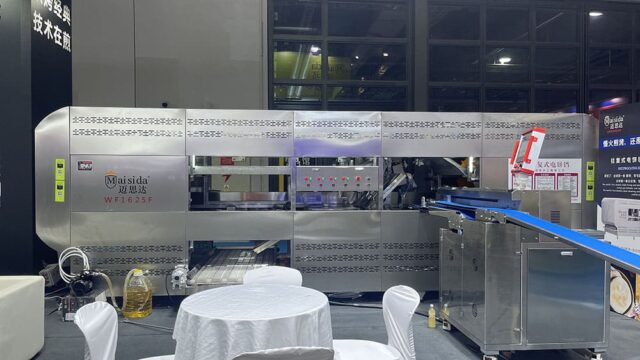
In the fast-paced world of commercial baking and food production, efficiency, consistency, and cost-saving are non-negotiable. For businesses that specialize in making pancakes, flatbreads, pastries, or other flat baked goods, the
reciprocating electric griddle has emerged as a game-changing piece of equipment. But what exactly is a reciprocating electric griddle, and why is it becoming a staple in modern food factories and bakeries? Let’s break down its definition, core features, working principles, benefits, and ideal applications—all tailored to help you understand its value for your production line.
A reciprocating electric griddle is a highly automated, energy-efficient commercial baking device designed specifically for large-scale production of flat or semi-flat baked goods. Unlike traditional manual griddles or static electric griddles that require constant human intervention, this equipment uses a “reciprocating” (back-and-forth) motion combined with electric heating technology to streamline the entire baking process—from dough placement to cooling.
Developed to address the pain points of traditional baking (such as high labor costs, inconsistent product quality, and excessive energy use), top-tier models (like those from Mysida, a leading baking equipment manufacturer) are often integrated with patented technologies to enhance performance, making them a go-to solution for food businesses aiming to scale operations.
Not all reciprocating electric griddles are created equal. Premium models—tested and certified by global standards like CE, SGS, and ISO9001—boast features that set them apart. Here are the key components to look for:
The biggest advantage of a reciprocating electric griddle is its hands-free workflow. It eliminates manual steps by integrating:
- Automatic pancake/ dough arranging: Precision mechanisms evenly place dough or batter on the griddle surface, ensuring consistent portion sizes.
- Automatic oil spraying: A controlled oil supply system reduces oil waste while preventing sticking—many models use a single high-standard oil supply to cut oil usage by up to 50%.
- Automatic flipping: The reciprocating motion (paired with flipping arms) flips baked goods at the optimal time, ensuring uniform cooking on both sides.
- Automatic cooling: Post-baking, the equipment cools products quickly, preparing them for packaging or further processing without delays.
Energy costs are a major concern for manufacturers—and reciprocating electric griddles address this head-on. For example, Mysida’s
reciprocating electric griddle saves
30% more energy than traditional equipment under the same production efficiency. Additionally, its compact design reduces space usage by up to 60%, making it ideal for factories with limited floor space.
Commercial equipment needs to withstand heavy daily use. High-quality reciprocating electric griddles are built with robust materials (such as food-grade stainless steel) and feature a designed service life of up to 30 years (backed by warranties of 3–5 years from trusted brands like Mysida). This durability ensures a long return on investment (ROI) for businesses.
Modern models come with LCD touch screens that allow operators to adjust temperature, baking time, and reciprocating speed with precision. This not only simplifies operation but also ensures consistent product quality—critical for maintaining brand reputation.
The “reciprocating” mechanism is the heart of this equipment, and its working principle is designed for efficiency:
- Preheating: The electric heating elements warm the griddle surface to the set temperature (typically adjustable for different recipes, e.g., 180–220°C for pancakes).
- Dough Placement: The automated arranging system dispenses dough or batter onto the griddle in uniform portions, avoiding overcrowding or uneven spacing.
- Reciprocating Motion: As the griddle surface moves back and forth, heat is distributed evenly across each product. This motion eliminates hot spots, ensuring every baked good is cooked to the same standard—no more undercooked centers or burnt edges.
- Flipping & Final Baking: At the optimal cooking stage, automated flipping arms turn the products to cook the second side. The reciprocating motion continues until baking is complete.
- Cooling & Output: Once baked, the products are transferred to an integrated cooling zone. After cooling, they are automatically moved to the next stage (e.g., packaging or stacking), completing the cycle.
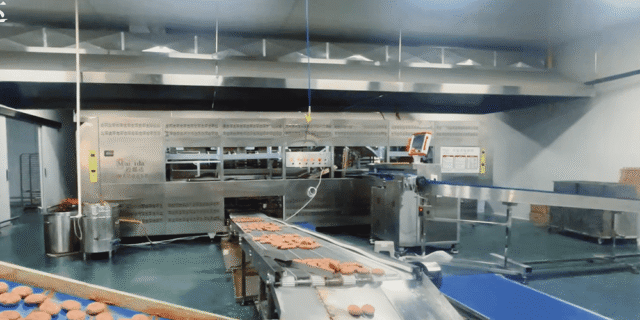
- Reduced Labor Costs: By automating arranging, flipping, and cooling, the equipment eliminates the need for manual labor—Mysida’s model, for example, saves up to 8 workers per production line, addressing the global “labor shortage” challenge.
- Lower Operational Costs: 30% energy savings and 50% oil reduction translate to significant monthly cost cuts, especially for high-volume producers.
- Consistent Quality: Automated controls and even heating ensure every product meets the same standards, reducing waste from defective goods.
- Scalability: The equipment handles high-volume production (e.g., thousands of pancakes per hour) without compromising quality, making it easy for businesses to expand their output.
- Versatility: While ideal for pancakes, flatbreads, and pastries, many models can be customized to handle other products (e.g., buns or small cakes), adapting to changing market demands.
This equipment is a perfect fit for any commercial food business that produces flat baked goods in large quantities, including:
- Commercial Bakeries: For making pancakes, crepes, or flatbreads for retail or foodservice.
- Frozen Food Manufacturers: For pre-baking products (e.g., frozen pancakes) before packaging.
- Fast-Food Chains & Cafeterias: To meet high demand for breakfast items (e.g., pancakes, hash browns) during peak hours.
- Industrial Food Factories: For large-scale production of baked goods for wholesale or global distribution.
A reciprocating electric griddle is more than just a baking tool—it’s a strategic investment for food businesses looking to boost efficiency, cut costs, and maintain consistent quality in a competitive market. By automating labor-intensive steps, leveraging energy-saving technology, and ensuring durability, this equipment helps manufacturers scale their operations while staying ahead of industry trends.
Whether you’re a small bakery expanding to wholesale or a large factory supplying global brands, a high-quality reciprocating electric griddle (like Mysida’s patented model) can transform your production line—saving time, money, and resources while delivering the reliable results your customers expect.