Henan Mysida Mechanical Equipment Co.,Ltd.


Rotary ovens are widely recognized as essential equipment in modern baking and food production. Thanks to their stable performance, uniform heat distribution, and high capacity, rotary ovens are used across a wide range of commercial and industrial applications. Understanding common rotary oven uses helps bakeries and food manufacturers choose the right solution for their production needs.
A rotary oven is a type of baking oven that features a rotating rack system inside the baking chamber. During operation, trays of products rotate continuously while hot air circulates evenly throughout the chamber. This design ensures consistent baking results, making rotary ovens ideal for professional environments that demand high efficiency and product quality.
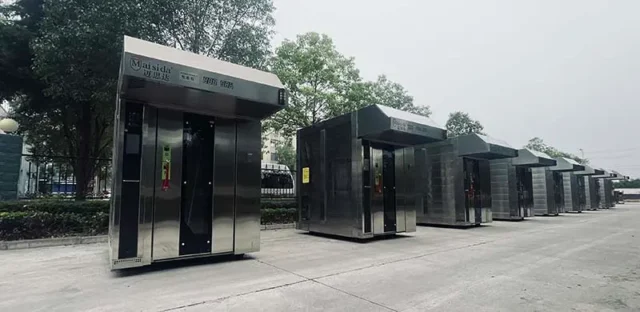
One of the most common rotary oven uses is in commercial bakeries. These ovens are suitable for producing large volumes of baked goods with consistent color, texture, and taste.
Typical bakery applications include:
Bread loaves and rolls
Croissants and laminated pastries
Cakes and sponge products
Cookies and biscuits
The rotating rack ensures even baking for all trays, reducing product waste and improving productivity.
In large-scale food factories, rotary oven uses extend beyond traditional baking. Their high capacity and automated controls make them ideal for continuous and standardized production.
Industrial applications include:
Frozen dough baking
Pre-baked bread products
Industrial pastry lines
Central kitchen food processing
These ovens support stable operation and consistent output, which is critical for industrial food manufacturers.
Hotels, restaurants, and catering businesses also benefit from rotary oven uses due to their flexibility and efficiency. Rotary ovens allow kitchens to handle peak demand periods while maintaining consistent quality across different menu items.
Their ability to bake multiple products simultaneously makes them suitable for large-scale catering operations.
Several features contribute to the wide range of rotary oven uses:
Uniform Heat Distribution ensures consistent baking results
High Capacity Design supports bulk production
Energy Efficiency reduces operating costs
Flexible Heat Sources such as gas, diesel, or electricity
Durable Construction for long-term industrial use
These advantages make rotary ovens a reliable choice for both commercial and industrial environments.
When evaluating rotary oven uses for your business, consider factors such as production volume, product type, energy source, and available space. Selecting the right rotary oven helps optimize workflow, improve product consistency, and increase overall operational efficiency.