Automatic flipping electric griddles are workhorses in food processing lines, streamlining production of burgers, pancakes, grilled vegetables, and more. Their ability to deliver consistent heat distribution and automated flipping boosts efficiency while ensuring uniform cooking quality. However, neglecting maintenance can lead to costly downtime, uneven heating, safety hazards, and compromised food hygiene. This guide outlines step-by-step maintenance practices to extend your griddle’s lifespan, maximize performance, and keep your food processing operations compliant with safety standards.
1. Regular Cleaning: The Foundation of Griddle Longevity
Cleaning is non-negotiable for preventing grease buildup, bacterial growth, and component damage—key for both food safety and equipment durability.
1.1 Cleaning Frequency
- Daily Cleaning: Mandatory for griddles used in continuous production (e.g., fast-food processing, frozen meal lines). Grease and food residue accumulate quickly, risking overheating and cross-contamination.
- Weekly Deep Cleaning: For intermittent use (e.g., small-batch processing), focus on hard-to-reach areas (e.g., flipping mechanism hinges, heating element gaps).
- Post-Production Wipe-Down: Always clean immediately after use—never let residue dry or cool on the surface.
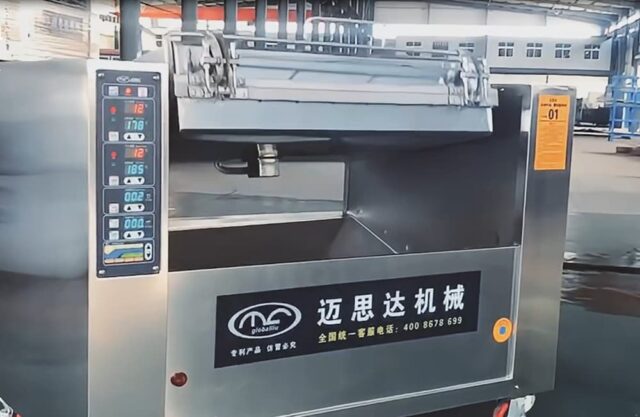
1.2 Safe Cleaning Agents & Tools
- Food-Grade Cleaners: Use non-abrasive, alkaline-based cleaners (e.g., degreasers approved by the FDA or NSF) to avoid scratching the griddle’s non-stick or stainless-steel surface.
- Avoid Harmful Chemicals: Steer clear of chlorine bleach, ammonia, or abrasive scouring pads—they corrode metal parts and damage non-stick coatings.
- Recommended Tools: Soft-bristle brushes, microfiber cloths, plastic scrapers (for tough residue), and a spray bottle for controlled cleaner application.
1.3 Step-by-Step Cleaning Process
- Safety First: Turn off the griddle, disconnect power, and allow it to cool to 140–160°F (60–70°C) (warm enough to loosen grease but safe to touch).
- Remove Detachable Parts: Take out drip trays, food guards, and removable flipping plates (if applicable). Empty and clean drip trays separately with soapy water.
- Degrease the Surface: Spray food-grade degreaser evenly on the griddle top. Let it sit for 5–10 minutes to break down grease.
- Scrub Gently: Use a soft-bristle brush to scrub the surface in circular motions. For stubborn spots, use a plastic scraper at a 45° angle.
- Clean the Flipping Mechanism: Wipe hinges, gears, and arms with a degreaser-soaked cloth. Avoid getting cleaner on electrical connections.
- Rinse & Dry: Wipe the surface with a damp microfiber cloth to remove cleaner residue. Dry thoroughly with a clean towel to prevent water spots or rust.
- Reassemble: Replace drip trays, food guards, and flipping plates once fully dry.
2. Inspect Mechanical Components Regularly
The automatic flipping mechanism, heating elements, and conveyor system (if integrated) are prone to wear—regular inspections prevent catastrophic failures.
2.1 Flipping Mechanism Maintenance
- Check for Wear & Tear: Inspect hinges, pivot points, and gear trains for signs of rust, corrosion, or excessive play. Replace worn bushings or gears immediately (look for manufacturer-recommended replacement parts).
- Test Movement: Power on the griddle (without food) and observe the flipping action. It should move smoothly—no jerking, squeaking, or hesitation. Squeaking indicates insufficient lubrication (see Section 5).
- Tighten Fasteners: Loose bolts or screws can cause misalignment. Use a torque wrench to secure connections (follow the manufacturer’s torque specifications).
2.2 Heating Element Care
- Visual Inspection: Check for cracks, bulges, or discoloration on heating coils or plates. Damaged elements cause uneven heating and pose fire risks.
- Resistance Testing: Use a multimeter to measure resistance (refer to the griddle’s manual for target values). Abnormal readings (too high/low) mean the element needs replacement.
- Clear Debris: Remove food particles from around heating elements with a soft brush—blockages reduce heat efficiency.
2.3 Conveyor System Maintenance (If Applicable)
- Check Belt Tension: Ensure conveyor belts are neither too loose (slippage) nor too tight (premature wear). Adjust tension bolts per the manufacturer’s guidelines.
- Clean Rollers: Wipe conveyor rollers with a degreased cloth to remove residue. Lubricate roller bearings (see Section 5) to prevent jamming.
- Replace Worn Belts: Look for fraying, cracking, or stretching. Use food-grade conveyor belts for replacements to avoid contamination.
3. Electrical System Safety & Maintenance
Electrical failures are a top cause of griddle downtime—prioritize inspections to avoid shocks or short circuits.
3.1 Wiring & Connectors
- Inspect Insulation: Check power cords, internal wiring, and connectors for fraying, cracks, or exposed wires. Replace damaged wiring immediately (use UL-listed or manufacturer-approved parts).
- Tighten Connections: Loose terminals cause overheating. Use a screwdriver to secure wire nuts, terminal blocks, and plug connections.
- Protect Against Moisture: Ensure electrical enclosures are sealed to prevent water or grease intrusion—moisture leads to short circuits.
3.2 Control Panel Calibration & Cleaning
- Test Functionality: Verify that temperature controls, timers, and flipping cycle buttons respond accurately. Malfunctioning buttons may require panel replacement or sensor calibration.
- Clean the Panel: Wipe the control panel with a damp cloth (avoid spraying water directly). Use a cotton swab to remove debris from button crevices.
- Calibrate Sensors: If temperature readings are inconsistent, calibrate the control panel using a calibrated thermometer (see Section 6.1).
3.3 Safety Switch Testing
- Emergency Stop Button: Press the emergency stop to ensure the griddle powers off immediately. Reset and test monthly.
- Overheat Protection: Trigger the overheat sensor (per manual instructions) to confirm it shuts down the griddle. Replace faulty sensors promptly.
- Door/Guard Interlocks: If the griddle has safety guards (e.g., around the flipping mechanism), test that it won’t operate if guards are removed.
4. Lubrication: Reduce Friction & Extend Component Life
Proper lubrication prevents metal-on-metal wear in moving parts—use only food-grade lubricants to avoid contamination.
4.1 Key Lubrication Points
- Flipping mechanism hinges and pivot points
- Gear trains in the flipping motor
- Chain drives (if applicable)
4.2 Lubricant Selection
- Choose NSF H1-rated food-grade lubricants (safe for incidental food contact).
- Use high-temperature lubricants (withstand griddle operating temps of 300–500°F/150–260°C) to avoid breakdown.
- Avoid petroleum-based lubricants—they can contaminate food and damage rubber components.
4.3 Lubrication Frequency
- Monthly: For high-use griddles (8+ hours/day).
- Quarterly: For low-use griddles (2–4 hours/day).
- Process: Clean lubrication points first (remove grease/debris), apply a thin layer of lubricant, and wipe away excess to prevent buildup.
5. Calibration: Ensure Precision in Cooking
Inaccurate temperature or flipping timing ruins product consistency—calibrate regularly.
5.1 Temperature Calibration
- Preheat the griddle to the target temperature (e.g., 375°F/190°C for burgers).
- Place a calibrated infrared thermometer or probe thermometer at 3–4 different spots on the griddle surface.
- Compare readings to the control panel display. If the difference exceeds ±2°F (±1°C), adjust the calibration screw on the control panel (follow the manual).
- Repeat monthly or after replacing heating elements/control panels.
5.2 Flipping Time Calibration
- Set the griddle to its standard flipping cycle (e.g., 2 minutes per side for pancakes).
- Use a stopwatch to time the flip—ensure it matches the set duration.
- Adjust the timer in the control panel if off. Test with a sample product to confirm even cooking.
6. Storage & Winterization (For Seasonal/Extended Downtime)
Proper storage prevents rust and component degradation during inactivity.
6.1 Short-Term Storage (1–4 Weeks)
- Clean the griddle thoroughly (follow Section 1.3).
- Dry all parts completely to prevent moisture buildup.
- Cover with a dust-proof, waterproof cover.
- Store in a cool, dry area (avoid direct sunlight or humidity).
6.2 Long-Term Storage (1+ Months)
- Perform a deep clean, including removing and cleaning the flipping mechanism.
- Apply a thin layer of food-grade rust inhibitor to metal surfaces (avoid non-stick coatings).
- Disconnect the power cord and wrap it securely.
- Elevate the griddle off the floor (use pallets) to prevent moisture absorption.
- For winter storage, ensure the area is above freezing (avoid pipe/coil damage if the griddle has a cooling system).
7. Troubleshooting Common Issues
Quickly resolve problems to minimize downtime—here are solutions for frequent issues:
|
Issue
|
Cause
|
Solution
|
|
Uneven heating
|
Damaged heating element, grease buildup, or misalignment
|
Replace faulty elements, deep clean, and realign the griddle surface
|
|
Flipping mechanism jams
|
Grease buildup, worn gears, or loose fasteners
|
Clean and lubricate, replace worn parts, tighten bolts
|
|
Griddle won’t power on
|
Tripped circuit breaker, faulty power cord, or broken safety switch
|
Reset breaker, replace cord, test/replace safety switch
|
|
Temperature fluctuates
|
Calibration error, faulty sensor, or blocked heating elements
|
Recalibrate, replace sensor, clean heating elements
|
8. Conclusion
Maintaining an
automatic flipping electric griddle in food processing lines requires a proactive routine: daily cleaning, regular inspections, proper lubrication, and calibration. By following these steps, you’ll extend the equipment’s lifespan, reduce repair costs, ensure consistent food quality, and comply with safety regulations. Always refer to your griddle’s manufacturer manual for model-specific guidelines, and schedule professional servicing annually for complex components. A well-maintained griddle is not just a tool—it’s a reliable asset for your food processing operations.