For busy commercial kitchens—from breakfast diners serving 50+ pancakes an hour to fast-casual spots churning out grilled chicken sandwiches—every minute (and every labor hour) counts. Traditional electric griddles force staff to hover, manually flipping food to avoid burning, which slows down output and raises the risk of errors. Enter the automatic flipping electric griddle: a tool designed to cut through inefficiencies by handling the “flip work” itself. But how exactly does this feature translate to better production efficiency? Let’s break down its mechanics, key benefits, and real-world impact.
First: What Is an Automatic Flipping Electric Griddle?
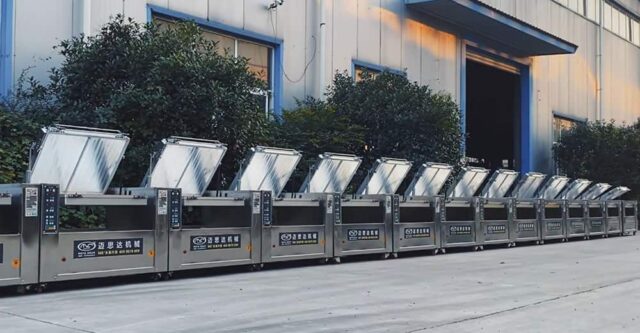
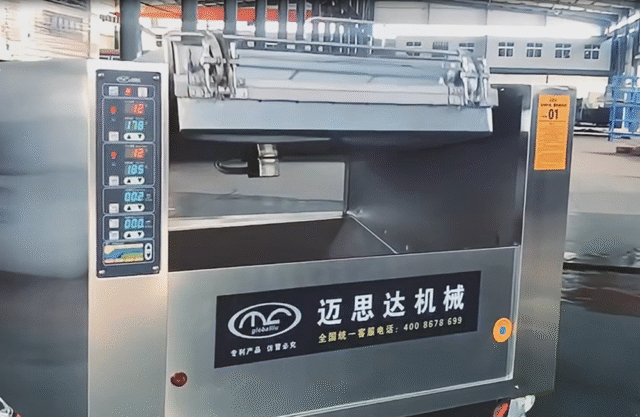
Before diving into efficiency gains, it’s critical to understand how this griddle differs from standard models. An automatic flipping electric griddle adds a motorized flipping mechanism to a traditional electric griddle’s core design (heating elements, temperature controls, non-stick surface). This mechanism—often a set of hinged plates, rotating arms, or a sliding flip tray—automatically turns food (e.g., pancakes, burgers, bacon) at a preset time or temperature, eliminating the need for manual intervention.
Key components that enable efficiency include:
- Programmable flip timers/sensors: Sync flipping with cooking time (e.g., 90 seconds for pancakes) or temperature (e.g., 165°F for chicken), ensuring consistency.
- Dual-zone heating: Many models have separate heat controls for the top and bottom plates, so food cooks faster without overcooking.
- High-capacity cooking surfaces: Commercial-grade units often span 24–36 inches, allowing simultaneous cooking of multiple portions—paired with auto-flip, this multiplies output.
- Durable motors: Heavy-duty motors power the flip mechanism, handling repeated use (100+ flips per hour) without breakdowns.
5 Ways Automatic Flipping Boosts Production Efficiency
The automatic flipping feature isn’t just a “convenience”—it directly addresses the biggest efficiency pain points in commercial kitchens. Here’s how it delivers results:
1. Eliminates Manual Flipping (Saves Labor Hours)
Manual flipping is one of the most labor-intensive tasks in griddle cooking. A line cook might spend 60–80% of their time standing at a griddle, flipping food one by one to prevent burning. With an automatic flipping griddle:
- Staff are freed to focus on other tasks: prepping ingredients, assembling orders, or serving customers.
- kitchens can reduce staffing needs during peak hours (e.g., a breakfast diner might need 1 fewer cook for the 7–10 AM rush).
Example: A fast-food chain using auto-flip griddles for bacon reported cutting bacon-prep labor by 30%—staff no longer had to flip 20+ strips of bacon every 2 minutes.
2. Cuts Cooking Time (Faster Turnaround)
Automatic flipping griddles use two key features to speed up cooking:
- Dual-sided heating: The top flip plate (or hinged lid) heats food from above, while the bottom griddle heats from below—this halves cooking time compared to single-sided griddles (e.g., a burger that takes 8 minutes on a standard griddle cooks in 4 minutes on an auto-flip model).
- Precision timing: Sensors or timers ensure food is flipped exactly when needed, avoiding undercooking (which requires re-heating) or overcooking (which means waste).
For commercial kitchens, faster cooking means:
- Shorter order wait times (critical for fast-casual or drive-thru spots).
- More orders served per hour (e.g., a diner going from 40 pancake orders/hour to 60 with an auto-flip griddle).
3. Reduces Food Waste (Saves Money)
Manual flipping is prone to human error: a distracted cook might flip a burger too late (burning it) or too early (undercooking, leading to discards). Automatic flipping eliminates this risk by:
- Ensuring consistent cooking: Every portion is flipped at the same time/temperature, so no more “hit-or-miss” results.
- Preventing overcrowding: Many auto-flip models have built-in portion dividers, so food doesn’t stick together (a common cause of waste on standard griddles).
4. Increases Batch Production (Higher Output)
Standard griddles limit output because staff can only flip so many portions at once. Automatic flipping griddles solve this by:
- Handling multiple portions simultaneously: A 36-inch commercial auto-flip griddle can cook 12–16 pancakes or 8–10 burgers at once, with the flip mechanism turning all of them in one motion.
- Enabling “set-it-and-forget-it” operation: Staff load the griddle, program the flip time, and walk away—no need to monitor each portion. This allows continuous cooking (e.g., loading a new batch as soon as the previous one is done) without gaps.
Case Study: A campus cafeteria switched to auto-flip griddles for breakfast sandwiches. Their output jumped from 30 sandwiches/hour to 55, allowing them to serve 250+ students in the 30-minute morning rush (up from 150 before).
5. Lowers Maintenance Downtime (Keeps Operations Running)
While all griddles need maintenance, automatic flipping models are designed for commercial durability—meaning less downtime for repairs. Key features that support this:
- Non-stick, easy-clean surfaces: Most auto-flip griddles have ceramic or Teflon coatings that resist food buildup. The flip mechanism also reduces scraping (since food doesn’t stick as much), extending the surface’s lifespan.
- Sealed motors: Motors are protected from grease and spills, preventing breakdowns from contamination.
- Built-in safety features: Overheat sensors and auto-shutoff prevent damage from temperature spikes, a common cause of griddle failure.
Less downtime means more consistent production: A kitchen that previously lost 2 hours/week to griddle repairs could cut that to 30 minutes with an auto-flip model—adding 6.5 hours of productive cooking time monthly.
Real-World Efficiency Impact: A Quick Example
Let’s put this into numbers for a mid-sized breakfast diner:
- Before auto-flip: 1 cook, 1 standard griddle, 40 pancake orders/hour, 5% food waste, $15/hour labor.
- After auto-flip: 1 cook (freed to prep other items), 1 auto-flip griddle, 65 pancake orders/hour, 1% food waste, $15/hour labor.
Weekly gains (assuming 6-hour breakfast shifts):
- 150 more pancake orders (65–40 = 25/hour × 6 hours × 5 days = 750 vs. 600).
- No extra labor cost, but 1 cook now preps 30% more ingredients (reducing prep time for lunch).
Common Questions About Automatic Flipping Griddles & Efficiency
Q: Does an automatic flipping griddle work for all foods?
A: It works best for flat, uniform foods: pancakes, burgers, bacon, grilled cheese, and chicken breasts. It’s less ideal for irregularly shaped foods (e.g., sausages) or delicate items (e.g., crepes), but many models have adjustable flip settings to accommodate different foods.
Q: Is it worth the upfront cost for small kitchens?
A: For small kitchens (e.g., a coffee shop with breakfast service), the ROI may take 6–12 months—but the time saved and waste reduced often make it worth it. Look for compact models (24-inch) to fit smaller spaces.
Q: How do I maintain the flip mechanism?
A: Clean the mechanism weekly with a damp cloth (unplug the griddle first!) to remove grease buildup. Lubricate the hinges (per the manufacturer’s instructions) every 3 months to keep the flip smooth.
Conclusion
An automatic flipping electric griddle improves production efficiency by targeting the root causes of slowdowns in commercial kitchens: manual labor bottlenecks, inconsistent cooking times, food waste, and limited batch output. By handling the “flip work” automatically, it frees staff, speeds up cooking, cuts waste, and boosts output—all while reducing maintenance downtime.
For any kitchen that relies on griddle cooking (breakfast spots, fast-casual chains, cafeterias), this tool isn’t just an upgrade—it’s a strategic investment in faster, more profitable operations. Now that you understand how it works, you can choose a model that fits your kitchen’s size and menu to maximize efficiency gains.