Electric industrial
tunnel ovens are essential thermal processing equipment widely used in food processing, electronics manufacturing, packaging, and material curing industries. They offer precise temperature control, uniform heating, and energy-efficient operation, making them a preferred choice for large-scale continuous production. For businesses planning to invest in this equipment, understanding electric industrial tunnel oven price factors, cost ranges, and value-added features is crucial to balance investment and production needs. This guide comprehensively analyzes the key determinants of electric industrial tunnel oven price, provides market cost references, and offers practical buying suggestions to help you make informed decisions.
Key Factors Affecting Electric Industrial Tunnel Oven Price
Electric industrial tunnel oven price varies significantly due to multiple factors, with equipment specifications, performance configurations, and customization requirements being the core determinants. The following are the most influential factors:
-
Size & Capacity: The length, width, and height of the tunnel, as well as the maximum processing capacity (kg/h or pieces/h), are the primary factors affecting price. Small-scale electric industrial tunnel ovens (length 2-5m, capacity 50-200 kg/h) are suitable for small workshops, with lower prices; large-scale models (length 10-30m, capacity 500-2000 kg/h) for industrial mass production require more materials and components, leading to a significant price increase. For example, a 3m small tunnel oven may cost $5,000-$15,000, while a 20m large-scale model can reach $50,000-$200,000.
-
Power Configuration & Heating System: Power rating (kW) and heating element quality directly impact electric industrial tunnel oven price. Higher power (50-200 kW) ovens for high-temperature applications (200-500℃) require more advanced heating elements (e.g., stainless steel heating tubes, ceramic heating plates) and power control systems, increasing costs. Energy-saving heating technologies (e.g., infrared heating, heat recovery systems) also add 10-30% to the price but reduce long-term operational costs.
-
Material & Construction Quality: The material of the tunnel body and inner liner determines durability and heat retention. Ovens with 304/316 stainless steel liners (corrosion-resistant, high-temperature resistant) are more expensive than those with carbon steel liners. Thickened insulation layers (e.g., rock wool, ceramic fiber) for better heat preservation, as well as robust frame structures for stable operation, also contribute to higher electric industrial tunnel oven price.
-
Temperature Control & Automation Level: Precise temperature control systems (e.g., PID controllers, PLC control) and automation features (e.g., automatic feeding/discharging, conveyor speed adjustment, temperature monitoring alarms) significantly affect price. Basic models with manual control are more affordable, while intelligent ovens with touch-screen operation, data logging, and remote monitoring functions can cost 20-50% more, suitable for industries with strict process requirements (e.g., electronics, pharmaceutical).
-
Customization Requirements: Custom designs for specific applications (e.g., food drying, electronic component curing, packaging film shrinkage) often increase electric industrial tunnel oven price. Common customizations include special temperature zones (multi-zone temperature control), waterproof/explosion-proof features, cleanroom-compatible designs, and integration with production lines. Customized models typically cost 15-40% more than standard models.
-
Brand & After-Sales Service: Well-known brands with reliable quality and comprehensive after-sales service (e.g., on-site installation, maintenance training, 1-3 year warranties) usually have higher prices than unknown brands. However, their product quality and service guarantee reduce the risk of operational failures and maintenance costs, offering better long-term value.
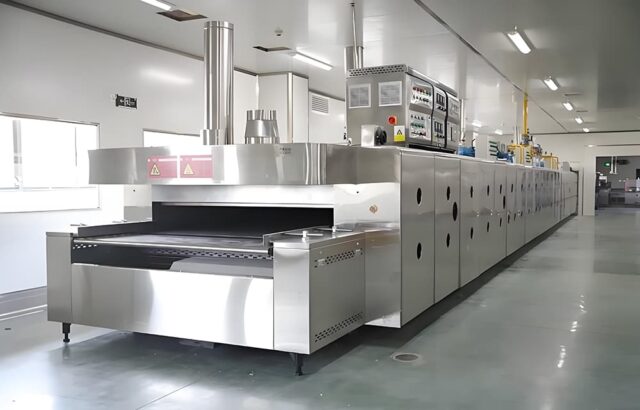
Electric Industrial Tunnel Oven Price Range Reference (2024 Market)
Based on market research, the following electric industrial
tunnel oven price ranges are for reference (prices vary by region, brand, and configuration):
-
Small-Scale (Standard Configuration): Length 2-5m, power 10-50 kW, capacity 50-200 kg/h. Price range: $5,000-$15,000. Suitable for small food processing workshops, small-batch electronic component curing.
-
Medium-Scale (Semi-Automatic): Length 6-10m, power 50-100 kW, capacity 200-500 kg/h. Price range: $15,000-$50,000. Suitable for medium-sized factories, e.g., bakery chains, packaging printing plants.
-
Large-Scale (Fully Automatic): Length 10-30m, power 100-200 kW, capacity 500-2000 kg/h. Price range: $50,000-$200,000. Suitable for large industrial production lines, e.g., large food processing plants, electronic component manufacturers.
-
Customized High-End Models: With special features (multi-zone temperature control, explosion-proof, cleanroom design), price range: $200,000-$500,000. Suitable for pharmaceutical, aerospace, and other high-precision industries.
Tips for Buying Electric Industrial Tunnel Oven: Balance Price & Value
When purchasing an electric industrial tunnel oven, it is not advisable to only focus on the lowest price; instead, balance cost with production needs and long-term benefits. Here are practical tips:
-
Clarify Production Requirements First: Determine your processing capacity, target temperature, material type, and automation needs to avoid over-investing in unnecessary features. For example, small workshops do not need to purchase large-scale fully automatic models, while high-precision industries should not compromise on temperature control accuracy for lower prices.
-
Compare Multiple Brands & Quotations: Collect quotes from 3-5 reputable manufacturers, compare electric industrial tunnel oven price, configuration, and after-sales service. Avoid choosing products with abnormally low prices, as they may have quality issues (e.g., poor heat insulation, short service life).
-
Consider Energy Efficiency & Operational Costs: Although energy-saving models have higher initial prices, they can reduce electricity costs by 15-30% annually. Calculate the payback period of energy-saving features to evaluate long-term value.
-
Verify After-Sales Service: Choose brands that offer on-site installation, maintenance training, and timely spare parts supply. A good after-sales service can minimize downtime and maintenance costs, which is as important as the initial electric industrial tunnel oven price.
-
Request Sample Testing: For special materials or processes, ask manufacturers to conduct sample testing to ensure the oven meets your production requirements before purchasing, avoiding costly modifications later.
Conclusion
Electric industrial
tunnel oven price is determined by multiple factors, including size, power, material, automation level, and customization requirements. Understanding these factors and market price ranges helps you make rational investment decisions. When buying, focus on balancing initial investment with long-term operational efficiency, rather than pursuing the lowest price blindly.